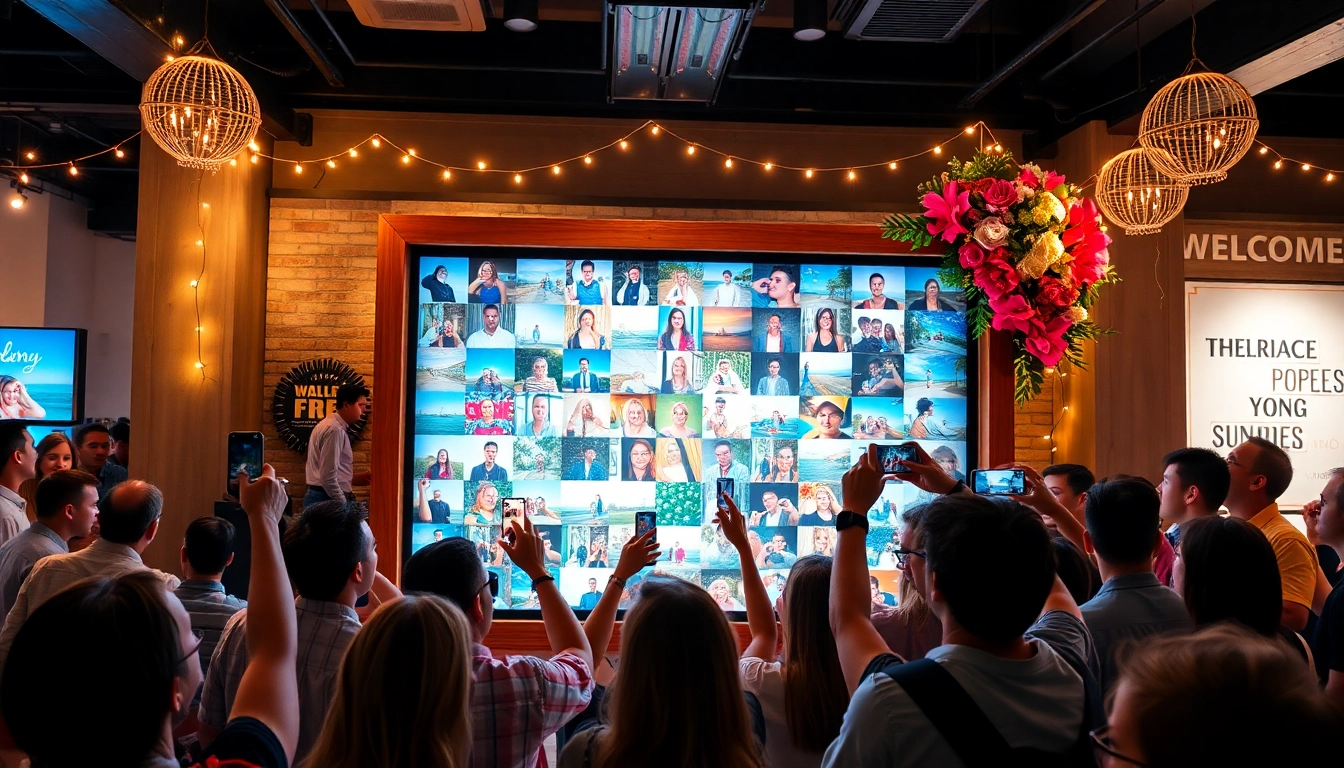
Understanding Interactive Photo Wall
What is an interactive photo wall?
An interactive photo wall is more than just a backdrop for pictures; it’s a dynamic space that invites individuals to engage, capture, and share special moments. Typically designed for events, parties, and public gatherings, these installations blend aesthetics with technology, offering users a platform to express themselves creatively. At its core, an interactive photo wall functions as a canvas for photos, but it often includes additional features like touchscreens, augmented reality, or social media integration to enhance user interaction.
Benefits of an interactive photo wall
The advantages of incorporating an interactive photo wall into your event or venue are extensive. Here are some key benefits:
- Engagement: It encourages visitors to participate actively rather than passively observing, creating memorable experiences.
- Branding: A well-designed photo wall can enhance brand visibility, featuring logos, themes, or company colors that represent the brand effectively.
- Social Sharing: By integrating social media features, visitors can instantly share their photos, extending the event's reach beyond physical attendees.
- Data Collection: Modern setups enable gathering user data and feedback, which can help in future planning and improvements.
- Visual Appeal: An artistic design draws attention, contributing to the overall aesthetics of the event space.
Common uses for interactive photo walls
Interactive photo walls are versatile and suitable for various settings. They are commonly used in:
- Weddings: Personalized backdrops that engage guests and capture the joy of the day.
- Corporate Events: For branding and networking opportunities, as guests can pose with company logos or hashtags.
- Festivals and Fairs: To provide entertainment and immersive experiences for attendees of all ages.
- Art Exhibitions: Interactive installations that invite visitors to be part of the artwork.
- Retail Spaces: To enhance customer experience and encourage social media sharing of brands and products.
Designing Your Interactive Photo Wall
Choosing the right location
The location is critical to the success of your interactive photo wall. A well-placed wall should be easily accessible and visible to attendees. Here are some tips for choosing the right location:
- High Foot Traffic: Ideal spots are where people gather, such as near entrances or common areas.
- Lighting: Ensure adequate lighting to enhance photo quality; natural light is preferred.
- Accessibility: Ensure that the installation is accessible to all, including individuals with disabilities.
- Flow of Movement: Place the wall in a way that does not obstruct movement but invites participation.
Suggested materials and styles
The materials and style of your interactive photo wall can significantly influence user experience. Consider the following options:
- Textures: Use a mix of soft and hard materials, such as wood, fabric, or metal, to create a visually interesting wall.
- Size: The size should be proportionate to the space and accommodate multiple users simultaneously.
- Theme: Design the wall to reflect the event’s theme, incorporating colors and elements that resonate with attendees.
- Durability: Choose sturdy materials that can withstand crowd interaction and outdoor conditions if necessary.
Incorporating technology
To truly elevate the interactive photo wall experience, incorporating technology is essential. Below are some ways to do this:
- Touch Screens: Integrate touch-enabled displays for interactive features like filters or effects.
- QR Codes: Allow users to scan codes that enable them to share their images instantly on social media.
- Augmented Reality: Provide an AR experience where users can see virtual elements or backgrounds through their devices.
- Photo Printing: Offer instant printing options, allowing users to take home physical mementos of their experience.
Engaging Your Audience with an Interactive Photo Wall
Strategies for audience participation
Encouraging participation is key to making the most of your interactive photo wall. Here are several strategies to engage your audience:
- Contests: Host a photo contest, inviting visitors to post their best shots for a chance to win prizes.
- Themed Days: Create specific themes for certain days to keep the experience fresh and exciting.
- Live Events: Schedule events where a photographer can guide guests on how to use the wall for maximum effect.
- Collaboration: Partner with local influencers or artists to attract more attention and engagement.
Utilizing social media
Social media plays a pivotal role in magnifying the reach of your interactive photo wall. Here’s how to leverage it effectively:
- Unique Hashtags: Encourage users to post with a designated hashtag that captures the event or your brand.
- Instant Sharing: Implement features that allow users to share their photos in real-time on social media platforms.
- Social Media Walls: Set up a live feed displaying social media posts that include your event’s hashtag, creating a sense of community.
- Engagement Posts: After the event, feature the best photos for follow-up engagement on your channels.
Sharing photos post-event
Sharing photos after the event is crucial for maintaining engagement and making guests feel valued. Approaches to consider include:
- Email Campaigns: Send follow-up emails with links or galleries of photos from the event to attendees.
- Online Galleries: Create a dedicated webpage where guests can view and download their photos.
- Social Media Features: Share highlights on your social media platforms to attract interest for future events.
- Printed Keepsakes: Consider sending physical copies of select photos as a personal touch that guests will appreciate.
Best Practices for Maintenance
Cleaning and care for your photo wall
To keep your interactive photo wall appealing, regular maintenance is essential. Here are some maintenance tips:
- Regular Cleaning: Wipe down the wall frequently to prevent dust accumulation and fading.
- Inspect Components: Check any technology or interactive elements to ensure they function correctly.
- Repair Damage: Address any wear and tear promptly to maintain the wall’s visual appeal.
- Setup Flexibility: Consider modular designs that allow for easy updates or repairs.
Updating photos and themes
Keeping the content fresh is vital to attract repeat visitors. Updating your photos and themes regularly can achieve this. Here’s how:
- Seasonal Themes: Change designs according to holidays or events to keep the experience relevant.
- User-Generated Content: Incorporate photos submitted by visitors to further personalize the experience.
- Trend Updates: Stay current with design trends and technology advancements that can enhance the installation.
- Feedback Implementation: Use feedback from guests to make adjustments that improve future installations.
Monitoring interaction and feedback
Gathering and analyzing interaction data provides insight into the photo wall’s success. Strategies include:
- Observation: Monitor how many people use the wall and which features are most popular.
- Surveys: Create short feedback forms that guests can fill out after using the wall for improvement suggestions.
- Digital Analytics: Use tech tools to track photo shares, likes, or comments on social media platforms.
- Engage Directly: Encourage users to provide verbal or written feedback on their experience during the event.
Measuring Success of Your Interactive Photo Wall
Key performance indicators to track
To evaluate the effectiveness of your interactive photo wall, focus on key performance indicators (KPIs) such as:
- Engagement Rate: Measure how many visitors interacted with the wall relative to total foot traffic.
- Social Shares: Track the number of photos shared on social media platforms.
- Feedback Scores: Analyze feedback gathered through surveys to assess enjoyment and satisfaction levels.
- Repeat Visits: Monitor if guests choose to engage with the installation more than once during the event.
Analyzing audience engagement
Once the event is completed, it's essential to analyze how the audience engaged with the interactive photo wall to improve future setups. Here are ways to assess this:
- Behavior Tracking: Identify which parts of the wall attracted the most visitors and for how long.
- Data Comparison: Compare current engagement metrics with previous events to identify improvements or decline.
- Demographic Insights: Analyze data to understand who interacted with the wall and tailor future designs and features accordingly.
- Post-Event Reviews: Conduct reviews with your team to discuss insights and how to better optimize for future iterations.
Improving future installations
To enhance the impact of future interactive photo walls, it’s vital to establish a feedback loop. Here are strategies to consider:
- Iterative Design: Regularly incorporate new features and styles based on previous experiences.
- User Engagement Strategies: Test different methods for encouraging users to interact, from gamifying the experience to integrating technology.
- Vendor Evaluations: Assess vendors’ efficiency and innovativeness in providing materials or tech solutions.
- Long-term Tracking: Set up methods to track performance across multiple events to identify long-term trends and preferences.
FAQs:
What materials are best for an interactive photo wall?
Use durable, weather-resistant materials for outdoor walls and lightweight frames for indoor events. Consider user interaction types to determine the best finishes.
How can I encourage visitors to use the photo wall?
Incorporate incentives like contests or giveaways for the best photos shared on social media. Fun prompts can also engage users more effectively.
Can I use technology to enhance the photo wall?
Yes, adding screens for live feeds or QR codes can make the photo wall more interactive, allowing users to engage in creative ways and share seamlessly.
How do I clean and maintain my photo wall?
Regularly wipe down surfaces and replace worn-out photos to keep the wall looking fresh appearance and inviting for visitors.
What feedback methods can I use for my photo wall?
Use surveys or social media tags to gather visitor feedback for continuous improvement and adjustments that enhance the user experience.